

Music Saves When Everything Else Fades
Follow the music home

My Sunday missives have been on pause while I focus on my first novel. But this piece insisted on being written, so here we are. Thanks for being here with me.
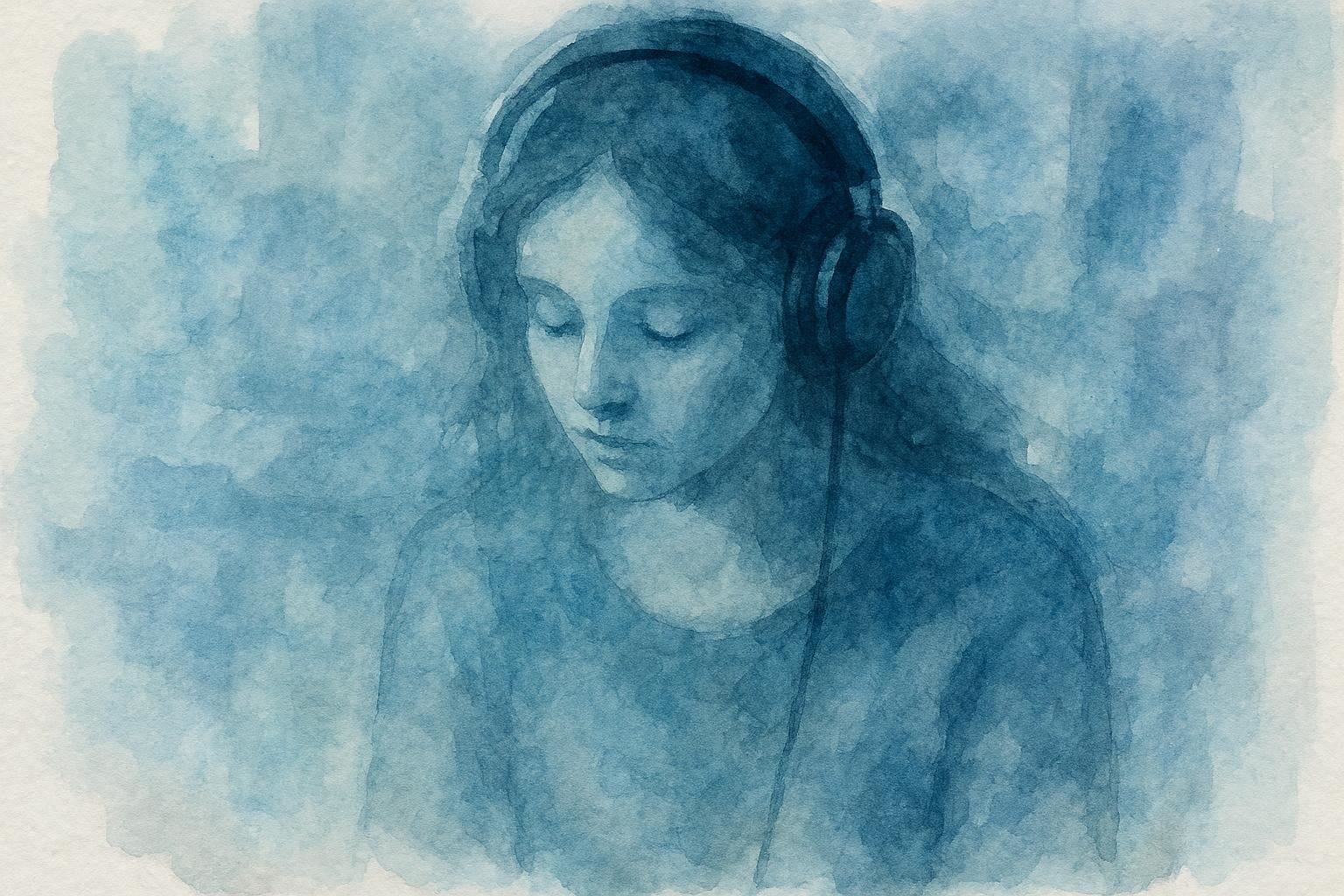
Friday, I listened to a DJ set I used to play over and over during the peak of my San Francisco years.
Deckard’s My Definition of Chill – Vol. 2.
I hadn’t heard it in years.
As it played, I experienced a strange sensation. It was like that whole part of my life had been imagined.
Twenty-two years of people, parties, routines, restaurants, clubs, and live house music that once felt like oxygen. And now, none of it is part of my daily life.
Enough time has passed—almost three years now—that San Francisco not only feels distant, but surreal. Like a vivid dream I once had and woke up from.
And yet, the music took me straight back. To the way it felt to be me then. The social circle I chose. The way of living. The intensity. The exhilaration—and the costs that came with it.
Listening now, I can feel how formative and necessary it was. How enlivening, but also unsustainable.
Isn’t it fascinating how music can remind us of who we were? How it brings back the feeling—and with it, a form of proof that we lived it?
Without it, whole chapters of our lives might dissolve.
.
I started thinking about the way music serves as an emotional archive—a place where identity gets stored when words fail. Where memory lives when the mind falters.
While researching this, I came across a video clip from the 2014 documentary Alive Inside, which explores music’s capacity to combat memory loss and restore a sense of self to people suffering from it.
The clip follows a man named Henry.
For years, Henry lived in a nursing home, mostly unresponsive. Barely speaking. Barely moving. He’s described as “almost unalive.”
Then his caregiver gives him headphones and plays music from his era.
Suddenly, his eyes open. His body animates. He starts singing. Afterward, he even jokes.
He remembers who he is.
Oliver Sacks, the neurologist who helped pioneer this work, says that through music, Henry was “restored to himself.”
Restored to himself.
Music didn’t just entertain him or give him something new. It returned something that was lost—his sense of self.
Wow, music. What a powerful tool.
Playlists have always marked chapters of life and aspects of myself.
I can still see my teen self sitting on my bedroom floor, making mix tapes with two cassette players. One playing “Poison,” the other capturing it right after “Pump Up the Jam” and “Ice Ice Baby.”
One of the most meaningful gifts I’ve ever received is a playlist my daughter made me for my birthday. It’s over four hours long, filled with songs from our morning dance parties and road trips, inside jokes and different eras of us.
“She Wolf.”
“Viva La Vida.”
“Insane in the Brain.”
“Dear Mama.”
“Dog Days Are Over.”
Hamilton soundtrack.
“Hold Up.”
“The Humpty Dance.”
It’s entertaining, yes, but more than that, it’s a record of being known. Of joy lived together.
It’s her childhood and my motherhood, built with music as glue.
There’s another playlist I’m building now, slowly, with the man I’m fortunate to spend time with.
Almost immediately after our first kiss knocked our socks off, we started talking about music. That night, when we went our separate ways, the songs that played on our drives home sealed the moment into our memory.
For him, it was “Iris” by The Goo Goo Dolls.
For me, “Awake My Soul” by Mumford & Sons.
I had the foresight to start saving the songs we referenced into a shared Spotify playlist. Now we both add to it. I love how it’s collaborative and growing, like a shared language forming in real time.
.
If you’re a Spotify user, you know Wrapped as the yearly snapshot of what you listened to most.
Last year, my top song was “Nightflyer” by Allison Russell.
Spotify recommended it at some point, and from the first listen, I couldn’t stop returning to it.
There’s a part in the song that I’m obsessed with:
I’m the moon’s dark side, I’m the solar flare.
The child of the earth, the child of the air.
I am the mother of the evening star.
I am the love that conquers all.
Though I didn’t experience the specific trauma the songwriter lived through, I recognize the complexity of loving the people who shaped us—and learning how to hold both gratitude and grief at the same time.
The song speaks to the long work of finding your way back to yourself without needing everything to be perfectly resolved. What it feels like to reach a place of liberation from wounds that were formed early, without erasing the past.
Victor Hugo once wrote:
“Music expresses that which cannot be said and on which it is impossible to be silent.”
If music can restore a man suffering from dementia to himself, maybe it can do something just as profound for the rest of us.
Maybe it can help us remember who we’ve been. And if we listen closely enough, it can tell us who we’re becoming.
To the love that conquers all,
~ Linzi